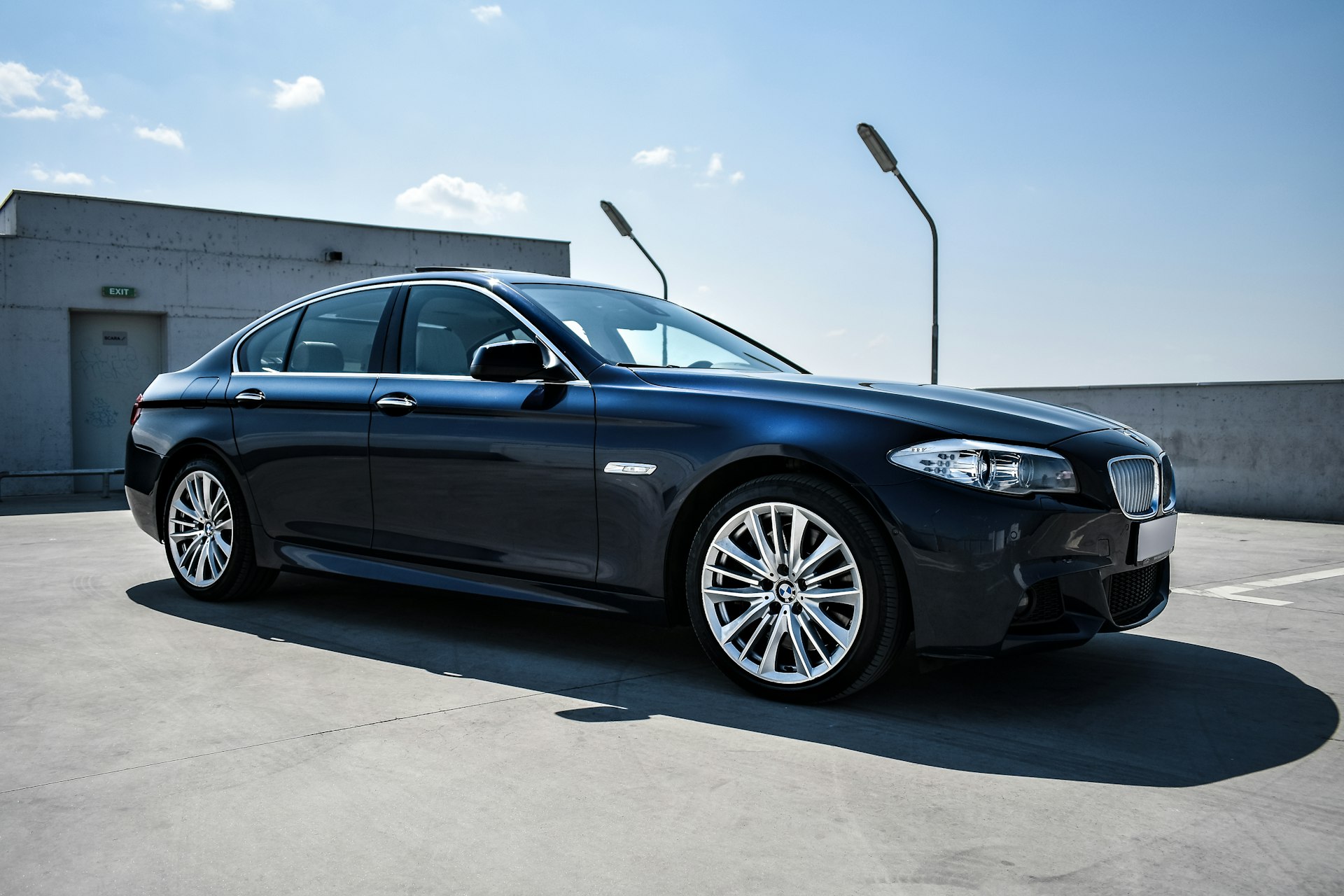
What Ceramic Coating Actually Does
Ceramic coating is a liquid silicon dioxide polymer applied by hand over clear coat. Once cured, it forms a rigid, hydrophobic layer measured in single-digit microns.
Its primary strength is chemical resistance. Acidic bird droppings, tree sap, and hard mineral tap water rinse off easily without etching the paint. It also produces deep, mirror-like gloss and prevents clear coat oxidation caused by relentless UV exposure.
However, ceramic coating does not protect against physical stone chips or heavy parking scratches. It is a sacrificial shield against chemical and environmental damage.
What Paint Protection Film (PPF) Does
Paint Protection Film is a thick thermoplastic polyurethane (TPU) sheet, usually 150 to 200 microns thick, custom-wrapped over vehicle panels.
Because of its physical thickness and elastomeric memory, quality TPU films possess self-healing properties. Minor swirl marks and light scratches disappear when exposed to engine heat or warm sunlight.
PPF absorbs the kinetic energy of flying highway gravel, preventing stone chips from penetrating down to the primer or metal body panels.
The Hybrid Approach for Chennai Enthusiasts
Many clients at our T. Nagar and Virugambakkam studios choose a combined protection package: PPF on high-impact zones (front bumper, bonnet, fenders, mirror caps, door edges) and 9H ceramic coating over the entire vehicle.
This gives you complete stone chip defense where the car takes impact, alongside effortless washing and intense gloss across the roof, doors, and rear panels.
Quick Specification Comparison
| Feature | 9H Ceramic Coating | Self-Healing PPF |
|---|---|---|
| Layer Thickness | 2 to 3 microns | 150 to 200 microns |
| Stone Chip Protection | Minimal | High impact absorption |
| Scratch Resistance | Swirl resistance only | Self-heals with heat |
| UV & Chemical Defense | Exceptional | Very good |
| Surface Hydrophobicity | Extreme water sheeting | High (with top coat) |
| Expected Lifespan | 3 to 5 years | 5 to 10 years |
Want to explore paint protection for your vehicle?
Book a session at our T. Nagar or Virugambakkam studio to evaluate clear coat condition, interior layout, or electrical compatibility.
Frequently Asked Questions
Can ceramic coating be applied on top of PPF?
Yes. In fact, ceramic top-coating over TPU film enhances gloss and prevents road grime from bonding to the porous polyurethane surface.
How long does installation take?
Ceramic coating takes 2 to 3 days including multi-stage paint correction. Full-body PPF installation takes 4 to 6 days due to meticulous edge wrapping.